Tuesday, September 22, 2020

Family Stories: The Whaler

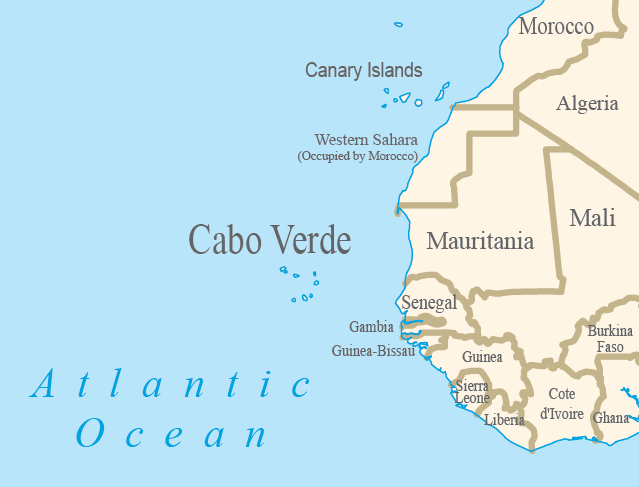
Enos Pedro Goncalves was born in San Antonio, Cape Verde, Portugal on 16 May 1816. 

Map of Cabo Verde - Econometrica, Inc.

He was a whaler who came to Newport, RI in 1836 on the ship Roman. Upon arriving in the United States, he found that few people could pronounce his last name, so he used his middle name as his last name (with the first syllable having a long "e" sound like the word "pea"). 

Around 1840, Enos was a charter member of the first colored church in Newport, RI, the Union Colored Congregational Church.
Union Colored Congregational Church; 49 Division Street in Newport

Enos sailed the world. He sailed to Maui on the whaling ship Roman in 1843 and departed on the whaling ship Florida (both of which were later lost to Arctic ice in the Whaling Disaster of 1871). In 1850, he sailed on the brig Hallowell from Providence to San Francisco, where he might have done some prospecting for gold in Calaveras County. 

That's one trip across the Atlantic and then at least three (and likely four) trips around Cape Horn at the southern tip of South America. Pretty remarkable travels.

Enos Pedro at his shoe shop in Newport (ca. 1888)

He eventually settled down in Newport and opened a shoe repair shop. Along the way, he and his first wife Cornelia Nokey had nine children in 15 years (only one of whom lived to adulthood) before she passed away in 1866. He married Experience Watson in 1868, and they had two more children (neither of whom lived to adulthood). Enos lived to the ripe old age of 90, and left a legacy of hard work, determination, and adventure that has inspired generations.

Tuesday, September 15, 2020

Family Stories: Working at the Willard

First, a note about my heritage.

President Obama once called himself a "mutt." Honestly, he's simply biracial. His mom was European (mostly English), and his dad was Kenyan. Pretty simple. He's the equivalent of a labradoodle.

My family tree includes a VERY diverse mix of people including black slaves, willing immigrants, and people who were listed on various censuses as indian, mulatto, negro, or white (and some people changed classifications from decade to decade). I'll try to tell some of the more remarkable stories, but it's important to know that any corner of my family tree could hold something you wouldn't really expect. I am a mutt.

When she was in her late 90's, Frances Braxton Thomas told me this story from her youth. Her mind was incredibly sharp, and the story has no inconsistencies with versions she told decades earlier.

Frances Braxton Thomas

Family legend has it that Frances' father Frank was descended from Carter Braxton, but we have no solid evidence to back that up (not that we've really looked). Aside from the Braxton name, Frank once said that "... the only thing his father ever gave him was a broken down nag." Despite his role model, Frank was a good man who did what he had to to support his family. One of his jobs was as a waiter at the famous Willard Hotel in DC. 

The Willard Hotel in the 1920's; photo from https://crackerpilgrim.com

After Frank had worked at the Willard for a while, one of Frank's brothers went there to try to get a job as a busboy or dishwasher, but was told that they don't hire Negros. Frank's brother responded "but you've got Frank working for you!" 

Here is the conversation that followed:

Boss: Frank, you’re our best waiter, but we don’t employ Negroes here. Why didn’t you tell me you were a Negro?

Frank: You never asked.

Boss: I have to let you go.

From that day forward, Frank never told anyone in his family where he worked.  

A couple personal notes:

  • Some people might judge Frank poorly because he passed as white (this is a thing in Black culture). But consider his challenge: He wasn't black enough to fit in with the Black folks, and wasn't white enough to fit in with the White folks. Like many of my ancestors, Frank forged his own path using hard work and whatever skills and resources he could muster.
  • If I told anyone who has seen my parents that one of them had a grandfather who passed for white to work at the Willard, while the other had a father who was a trained engineer, but became a teacher because nobody would hire a black engineer, they would assume the former is my mother and the latter my father. That would be backwards. The Black American experience has always been difficult and messy.

Tuesday, September 8, 2020

Family Stories: Daught Jones Pulled Her Siblings to NYC

Dock and Willie Jones raised their family in Wartrace Tennessee, which is a suburb of Murfreesboro (a funny idea if you know the area). Dock was born into slavery in 1853, and became a carpenter who literally helped build the town of Wartrace. Most notably, he raised money for and built the town's first school so the young black children (including his own) could be educated. 

Like many negro parents in the South in the late 19th and early 20th centuries, Dock and Willie wanted their children to get out of the South (read The Warmth of Other Suns for rich stories about The Great Migration). As Dock used to say, "Always turn your feet North. Your future is not in the South, but in the North." 

Their first child was Leola, who was known as Daught because she was the eldest daughter. Daught met her husband Lorenzo at Knoxville College, and they moved to New York City in the early 1900's after a brief time in Asbury Park, NJ.

Daught and Laura's souvenirs from Asbury Park, NJ

Daught became the magnet who drew her brothers and sisters to NYC. First came her sister Laura Jones, who was Booker T. Washington's personal secretary.

Laura Jones
Four of Daught's brothers: Willy, Ed, L.D. "Tete", and Baxter "Back" eventually moved to NYC, and most of them worked for the railroad. Ed fought in WWI with the 369th Infantry Regiment "Harlem Hellfighters", which was awarded the Croix de Guerre after fighting with the French (the US Army wouldn't allow the unit to fight), and Back won numerous medals and commendations for his skill and bravery fighting for the US in Italy in WWII.

When my grandmother, the youngest Jones sister Georgie, moved to NYC (after a brief, unhappy stint in DC), Daught arranged for her to meet George Pedro, and the rest (as they say) is history.

Of the Jones children who lived to adulthood, only Tom Lynn didn't move to New York. He married the love of his life Sadie Denis, and they lived their entire adult lives in her hometown of Culpeper, VA in homes Tom Lynn built.
Willie and Dock Jones with Daught, Laura, Willy, Tom Lynn, and Georgie (ca. 1906)

What strikes me most about the Jones family is the journey that united seven siblings born from 1881 to 1907. Daught became the sister-matriarch who helped many of her siblings realize their father's dream.

Daught with her nephew Donald around 1960

Monday, August 31, 2020

Family Stories: Tasco Delano Thomas

Tasco Delano "TD" Thomas was pretty freaking amazing. Born in St. Mary's County, MD to a black father and Native American mother, he was orphaned at a young age. He later made the long, arduous trip to Manassas Industrial School for Colored Youth (aka Manassas Institute, it was the closest school for colored students) for school where he was Treasurer of his class and was described by his track coach as an "iron man" who could run three middle-distance races in a single day at the Penn Relays and win them all. 

Manassas Institute Track Team; TD is standing 2nd from the left

That's all impressive, but he only became more so in the years to come.

After saving his money, TD and his wife Frances (a rather remarkable woman in her own right) decided to buy a business property in which to set up shop. The location on Georgia Avenue in DC was subject to covenants that restricted owners from selling to negroes, but TD found a fair-skinned black man to work as an intermediary. He negotiated the contract, and got the sellers to sign. When TD showed up for settlement, the owner tried to back out, but the owner's lawyer advised him to go through with it because they had already signed the contract. Backing out then would have gotten them into hot water, so TD was able to buy the building and became the first black business owner on Georgia Ave.

Tasco Delano Thomas (foreground) in his 2nd shop on Georgia Ave.

So, how did TD pay for the building? With cold, hard cash. As a youth, TD had put $7 in a bank account, but when he went back to the bank in 1930 to collect his money, the bank told him that fees had eaten away his money, so none of it was left. Dismayed, TD never put money in a bank again. Rather, he kept his money in a steamer trunk in their home. Time to buy a barber shop? Grab money out of the steamer trunk. Pay for his son to attend Yale? Steamer trunk. Help his son and daughter-in-law with cash at settlement for their first home? Bring a paper bag full of cash from the steamer trunk. 

That an orphan from Southern Maryland was able to own his own business and use income from that business to send his kids to college and help with down payments is remarkable. That his son became Secretary of the FTC and his daughter a school Principal, and his grandchildren became educators, social workers, public servants, and business people with a slew of impressive degrees, devotion to public service, and amazing spouses is quite the testament to the example he set (and the amazing woman he married).

Friday, August 21, 2020

Foolish Adults in the Room: The Prisoner's Dilemma and Politics

I often hear and read democrats proclaiming some version of "when they go low, we have to go high" or "we have to be the adults in the room" or some similar sentiment. The idea is that the divisiveness in the country can be healed if we reach across the aisle and be better then the Republicans have been.

When I was a freshman in college, I took an amazing course called Aggression, War, and Civilization, and lessons from that course still resonate. One important lesson came from a lab in which a partner and I performed 100 iterations of the Prisoner's Dilemma. If you don't know about the Prisoner's Dilemma, read about it here.

So, from a game theoretical perspective, the correct long-term strategy is for both sides to play nice. If we both stay loyal to each other, that provides the best long-term outcomes because it is a stable state.

But here's the thing, if one partner turns on the other and never is met with a fight, then the new stable state is one in which one partner prospers while (and because) the other suffers. 

This second state is where I think the US political system is right now. 

Harvard Political Review's Gordon Kamer laid it out nicely in Hyper-Partisanship and the Prisoner’s Dilemma. As he says:

Bipartisanship is thus incorrect for any single politician to pursue without genuine concessions from other actors. Trust between politicians has eroded so that no one will logically cooperate in the prisoner’s dilemma, and political discourse worsens.

Here's one example: Obama was a nice guy who reached across the aisle. He was not a radical. Still, Mitch McConnell denied him the Supreme Court appointment he should have been able to make. The GOP has no reason to temper their odious behavior because they know the Dems will respond with bipartisanship and moderation. Our stable state involves the GOP's scorched earth approach being followed by Dems being kind, bipartisan moderates. 

Maybe the Dems need to wield control and really push through some bold ideas. We've tried it the moderate Dem and/or GOP way for a long, long time, and the result is growing wealth gap, fewer people getting proper healthcare, and a host of other issues summarized nicely in this NY Times article The U.S. Is Lagging Behind Many Rich Countries. These Charts Show Why.  

Dems cooperating while the GOP continues to play their nasty games is a long-term strategy that has been predictably bad for political discourse and the US.

Thursday, June 25, 2020

Let's Talk About Race: Bucky Barnes

When I had coffee with a friend from high school, we had a nice chat that was inspired by a couple articles.

At The Root, Michael Harriot wrote Where'd All These Woke White People Come From?, which is a truly great article. Here is one tremendous quote (of many):
It’s not that white people don’t care about their friends. It’s that they don’t think about racism. White people are immune to white supremacy so they don’t even consider that some of us are racism-intolerant.
Another interesting article is on Medium by Ramesh A Nagarajah: Reflections from a Token Black Friend

Like many of my friends from high school, these two articles caused my friend some pain to think that the experiences and perceptions of her black friends were so different from her experiences and perceptions. As we spoke, a deep literary idea struck my mind.

For decades, one of the most famous deaths in the Marvel universe was that of Captain America's sidekick James Buchanan "Bucky" Barnes. Ed Brubaker kinda un-killed him in 2005, and when he did this, Brubaker made other important changes to Bucky's backstory. The Star's Kaleon Rahan describes the core of the change in Captain America's sidekick Bucky is one big and bad, bad boy:
"... Brubaker injected some substance into [Bucky]’s history by revealing that his sidekick status was actually a cover-up, and that the US military had bigger plans for him, including black ops stuff that Cap wouldn't have the stomach for."
This is called a retcon. Brubaker changed Bucky's history, and in doing so he changed how we see two characters we always thought we knew. We always thought that Captain America was the squeaky clean defender of liberty who was the critical piece that helped the allies win WWII and Bucky was his kid sidekick. Now, we saw that Cap was too squeaky clean, and Bucky was there to defend him and to do the dirty work that needed to be done. 

This is what many people are dealing with now. All of a sudden, they are seeing perspectives they hadn't seen before, and it's not only changing how they see old friends and past events, but also how they see themselves and current social/political dynamics. Some of my friends are apologizing for what they did or didn't say or do decades ago. One moving example is a friend who said:
"I know a great deal better today and I am working to do better daily."
I hope the message quoted above is true for all of us. It's certainly true for me. Dynamics that helped continue and even deepen hurtful attitudes are everyone's burden. They belong to the white kids who make jokes about race as well as to the black kids who laugh along or brush them off. I'm not saying that the black kids are to blame for racism, but all the things we said and how we reacted to them were the result of entrenched, toxic attitudes. As we look back, we're all seeing things that make us uncomfortable about our own actions and inactions. We need to allow that discomfort to drive us forward.

For years now, I have said that one of the few upsides to being a black man in America is being able to make white folks feel uncomfortable about race. Being comfortable with this role is not something I was strong or self-aware enough to embrace when I was younger, and I cringe when I think of some of my inaction. But now I try to lean in to being an agent of understanding. This is still an area of growth, but I'm working on it.

This national discussion about race is like a huge retcon that is changing how we see our past experiences, relationships, and behaviors. Retcons can be disconcerting, but we can all benefit from digging into them and really grappling with the new understandings they bring. The new Bucky can be a tough character to deal with, but he is a MUCH more interesting and complex character than the old sidekick character. 
Monday, June 22, 2020

Pandemic Silver Linings

The pandemic has been horrible in so many ways. Lives have been lost. Jobs and businesses have been lost. Education gaps have widened. Friends and loved ones have been isolated from one another. 

But allow me to call out a few silver linings:

Seeing Heroes: Nurses. Grocery store workers. Truck drivers. Meat packing plant workers. Farmers. Restaurant staff. The list goes on and on. The rank and file is full of under-appreciated heroes who have stepped up during this crisis. These are the heroes who are pulling us through this -- not our venerated athletes or CEOs.

Appreciating Missing Critical People: Many parents now have much better understanding of what every teacher deals with every day. What about people who clean houses and cut hair and so many other tasks that we value, but were put on hold? During the lockdown, we have been living the old adage that you don't properly value what you have until it is taken away from you.

BLM: George Floyd wasn't the first. Black and brown people have been victims of police brutality before, so why did these protests really gain traction? I think we can thank the pandemic. 
  1. Logistics: Traffic is light and parking is easy. 
  2. Free Time: Movie theaters and gyms and most other athletic/entertainment venues are closed. Plus, unemployment is around 20%.
  3. No Distractions: There are no sports or new movies or other distractions to replace it in the news cycle. The BLM movement is flourishing in the open space created by the pandemic.
Inspiring Change: The wheels of progress in education grind incredibly slowly. The pandemic has the potential to add a big jolt of innovation as schools and educators try to figure out how to make virtual and blended learning work. I imagine that necessity is driving innovation in other areas as well. 

Seeing Flaws in Our Systems: People who depend on their low-paying jobs for their healthcare are either showing up when sick (e.g., Smithfield plant) or losing health coverage. Many CEOs and Presidents and other leaders have made it explicitly clear that they care more about money than they do about the health of the people who toil to enrich them. The pandemic is a stressor that helps us see the flaws in our systems. It doesn't point the way to fixing them, but understanding that something is broken is the first step.

None of these silver linings provide succor to those who have lost loved ones or businesses or jobs or security or comfort. As a society, I am hopeful that we will make changes to our mindsets, relationships, and systems so the legacy of the pandemic will include some good outcomes.